Quick answer: if your car vibrates or shakes at highway speed, you most likely need wheel balancing. If it pulls to one side, the steering wheel sits crooked, or your tires wear unevenly, you most likely need an alignment. The two services sound alike, but they fix completely different problems, and knowing which symptom points where saves you from paying for the wrong fix.
What's the difference between alignment and balancing?
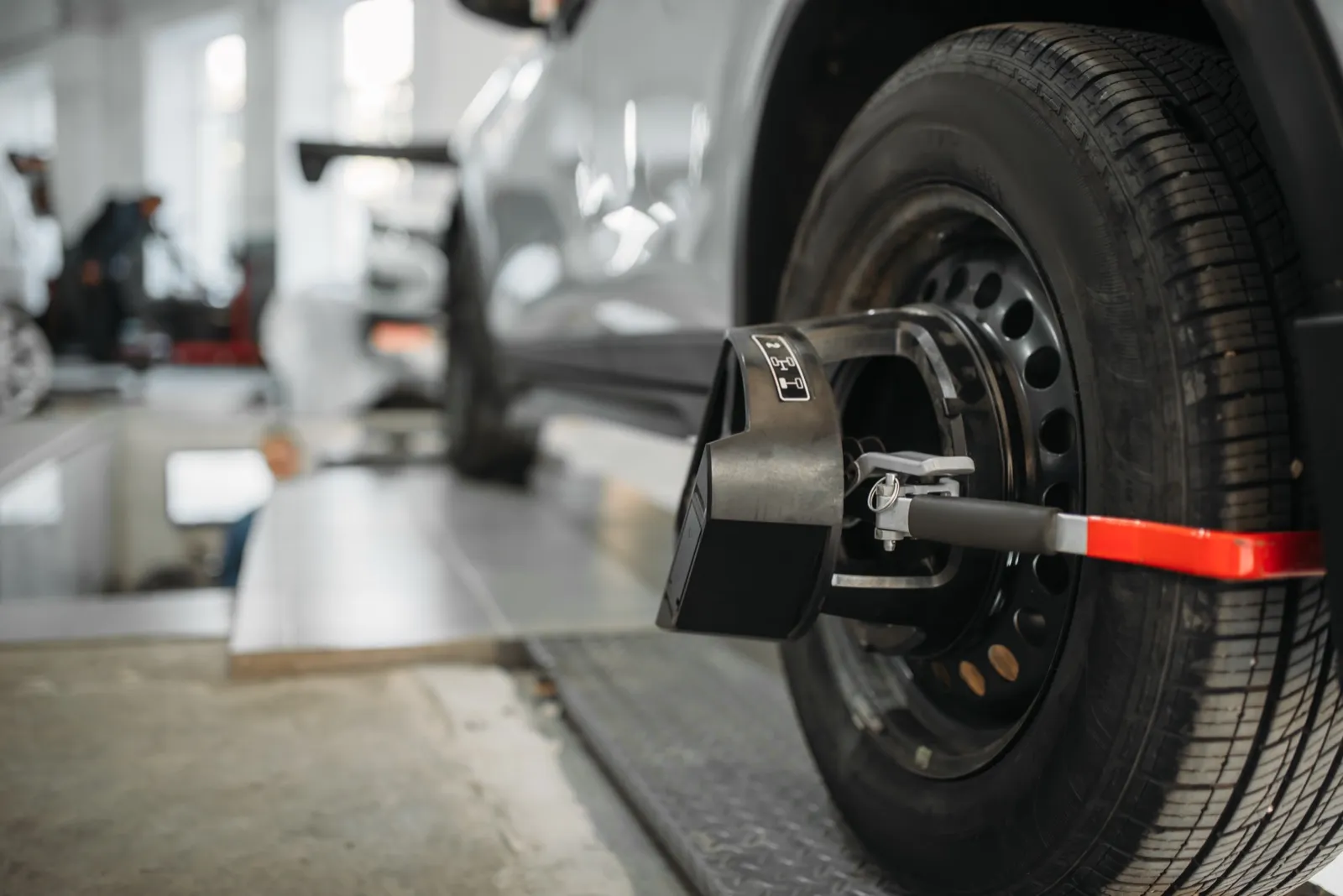
An alignment adjusts the angles of your wheels — camber, caster and toe — so they sit square to the road and parallel to each other, the way the manufacturer intended. Nothing spins during an alignment; it's pure geometry. Potholes, curb hits and worn suspension parts are the usual reasons those angles drift out of spec.
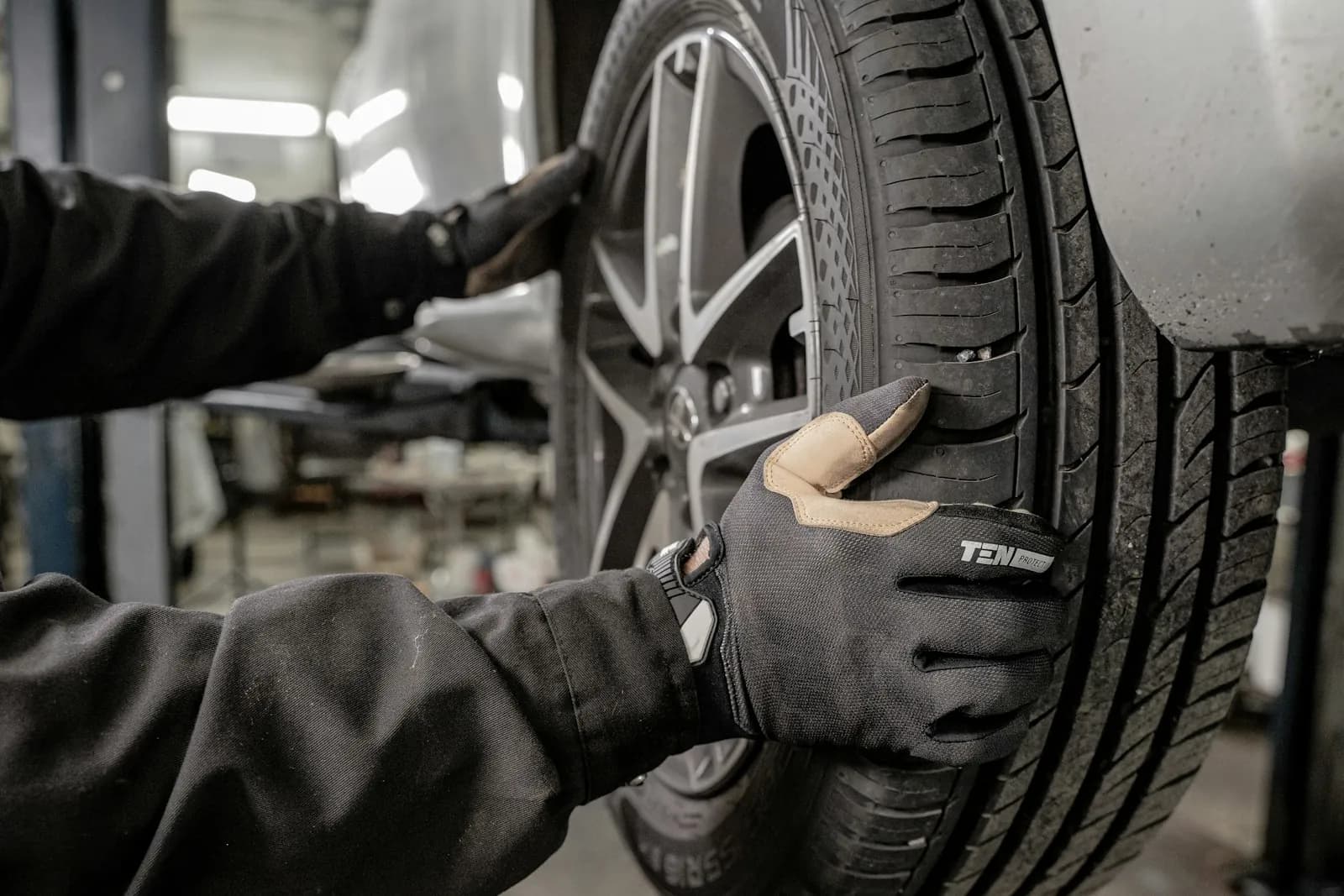
Balancing corrects small weight differences around each wheel-and-tire assembly. Every tire and wheel has slightly heavy spots, and at speed those spots become vibration. A technician spins the assembly on a balancing machine and attaches small weights to even it out. We cover that service in more depth in our guide to wheel balancing.
Which service do your symptoms point to?
Here's the shortcut: vibration means balance, pulling means alignment.
Balancing symptoms look like this: a shake or buzz in the steering wheel that shows up around 50 to 70 mph and fades at other speeds, vibration you feel through the seat or floor instead of the wheel (often a rear tire), or a shake that appeared soon after new tires or a rotation.
Alignment symptoms look like this: the car pulls or drifts to one side on a straight, flat road; the steering wheel is off-center even when you're driving straight; tires wear unevenly, with feathered edges or one shoulder going bald faster than the rest; or the handling feels loose and wandery after a hard pothole hit.
In Central Minnesota, spring pothole season is hard on both. One good hit can knock a wheel weight off the rim and jolt your alignment out of spec at the same time, which is why a single pothole sometimes produces both a vibration and a pull.
Is balancing tires the same as an alignment?
No. It's one of the most common mix-ups we hear, and it's understandable: both involve your wheels, and both often happen when you buy tires. But balancing works on the wheel-and-tire assembly itself, off the vehicle, while an alignment adjusts the suspension geometry on the vehicle. Balancing won't fix a pull, and an alignment won't fix a highway-speed shake. If a shop does one when your car needs the other, the symptom stays.
Do you ever need both at once?
Often, yes. New tires are the classic case: balancing is part of every proper installation, and having the alignment checked at the same time keeps bad angles from chewing up the fresh tread. Problems also travel together: uneven wear from a neglected alignment can eventually throw a tire's balance off too.
Neither service runs on a strict calendar. Tires get balanced whenever they're mounted, and plenty of drivers have them rebalanced at rotation time, every 5,000 to 6,000 miles, if a vibration has crept in. Alignment is event-driven: after a hard impact, when you install new tires, or as an annual checkup if your commute includes a lot of rough road.
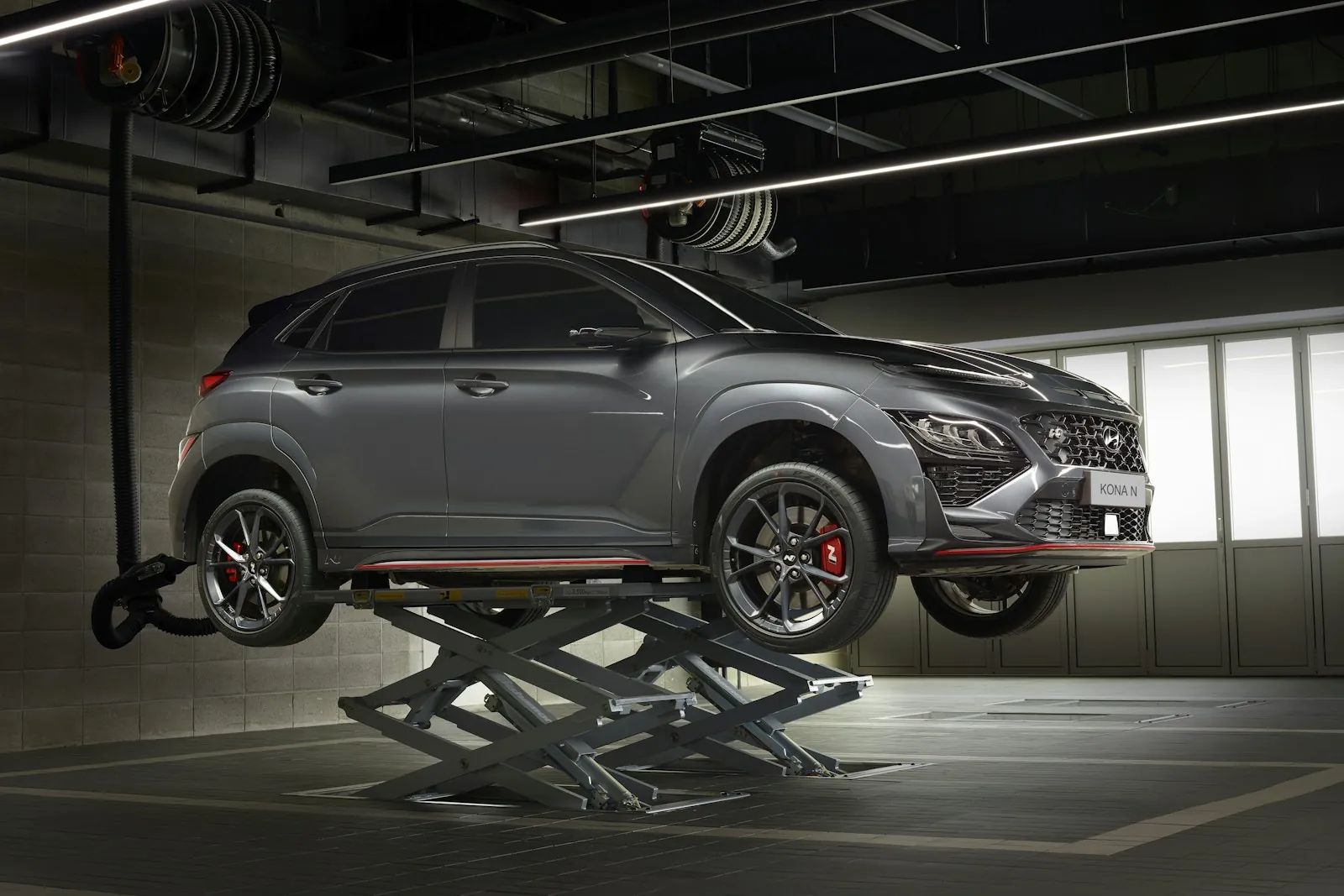
Still not sure which one your car needs? You don't have to diagnose it yourself. Describe the symptom when you schedule a service request or call us at (320) 363-7246, and we'll check the alignment on the rack, spin the wheels on the balancer, and tell you honestly which one is out of spec. No guesswork, no upsell.