The five most common symptoms of bad alignment are a car that pulls to one side, a steering wheel that sits off center, uneven tire wear, a vibrating steering wheel, and tires that squeal in turns. Alignment problems usually start subtly — a little drift here, a slightly crooked wheel there — then quietly cost you in tire life and fuel economy. Here's what each symptom looks like, and what tends to cause it.
1. Your car pulls to one side
This is the classic sign. On a straight, flat stretch of road, loosen your grip slightly (safely, with traffic clear) and see what the car does. A gentle drift toward the shoulder can just be the crown of the road, but if you're constantly correcting the wheel to keep the car tracking straight, your alignment is a prime suspect. One quick thing to rule out first: uneven tire pressure can cause a pull too, so make sure all four tires are at the pressure listed on your driver's door-jamb placard before assuming the worst.
2. Your steering wheel is off center
If the wheel sits crooked while you're driving dead straight, the logo tilted ten or fifteen degrees off level, your wheels aren't pointing where the steering wheel says they are. This one often shows up right after you hit a big pothole or clip a curb. It's easy to get used to and ignore, but a crooked wheel means the toe angles are off, and off-toe is the fastest way to scrub tread off a set of tires.
3. Your tires are wearing unevenly
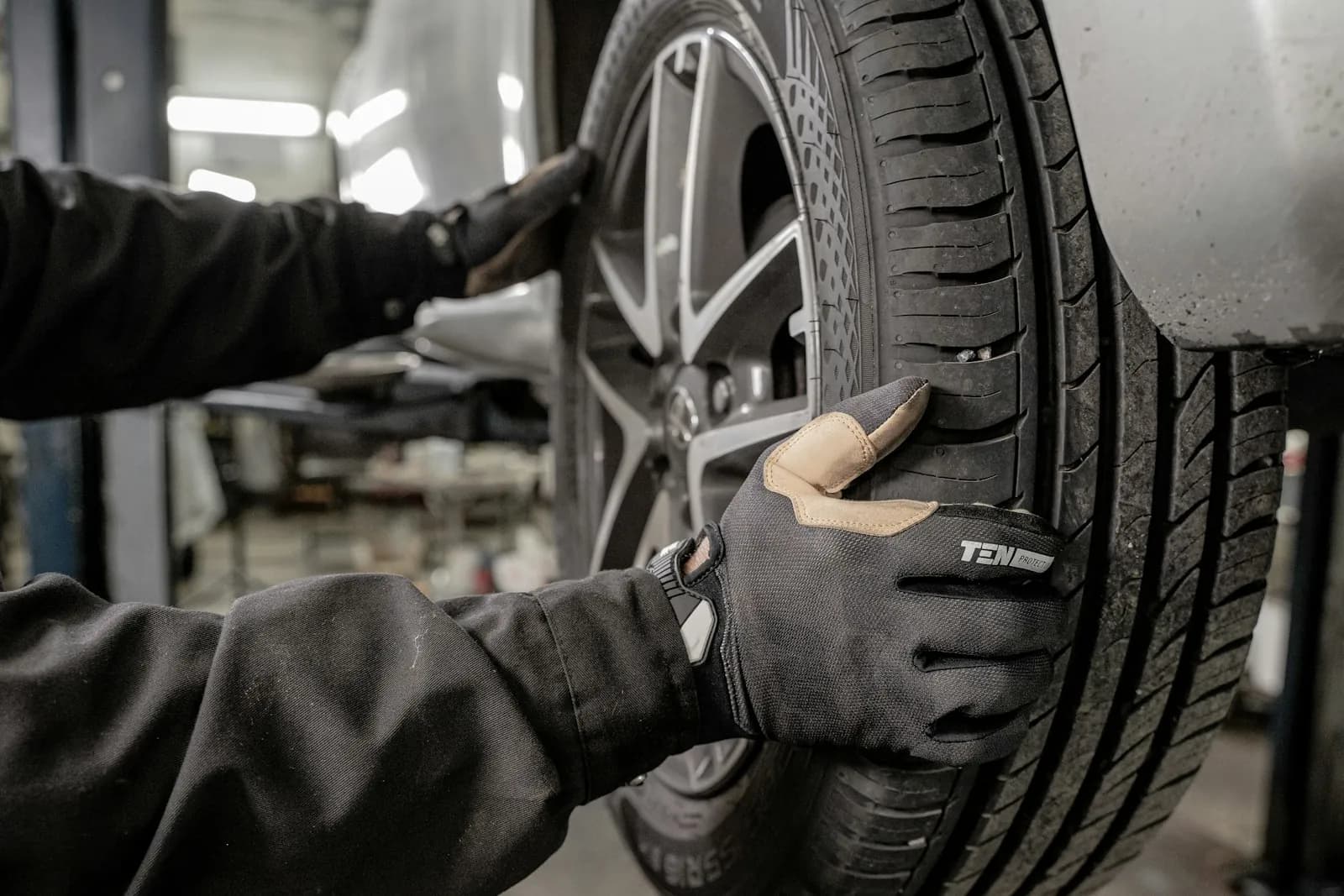
Run your hand across the tread (carefully: feathered edges can be sharp). Wear concentrated on the inner or outer edge of a tire, or a rough, sawtooth feel across the tread blocks, points to alignment angles that are out of spec. This is the expensive symptom: misalignment can take thousands of miles off a tire's life, and rotating your tires won't fix wear that alignment is causing. If you just bought new tires, catching this early protects that investment.
4. Your steering wheel vibrates
A shaking or buzzing steering wheel can come from alignment, but honest answer: it's more often a wheel-balance issue, especially if the shake shows up at highway speed and smooths out below it. Alignment problems tend to feel like pulling and wandering; balance problems tend to feel like vibration. If shake is your main symptom, read our guide to alignment vs. balancing, or just bring it in and we'll figure out which one you actually need, because guessing wrong means paying for the wrong service.
5. Your tires squeal in turns
If your tires chirp or squeal through ordinary corners at ordinary speeds — not spirited driving, just a normal turn into a parking lot — the tires may be scrubbing sideways instead of rolling cleanly. Worn tread and underinflation can cause squeal too, but combined with any of the symptoms above, it strengthens the case for an alignment check.
What causes bad alignment?
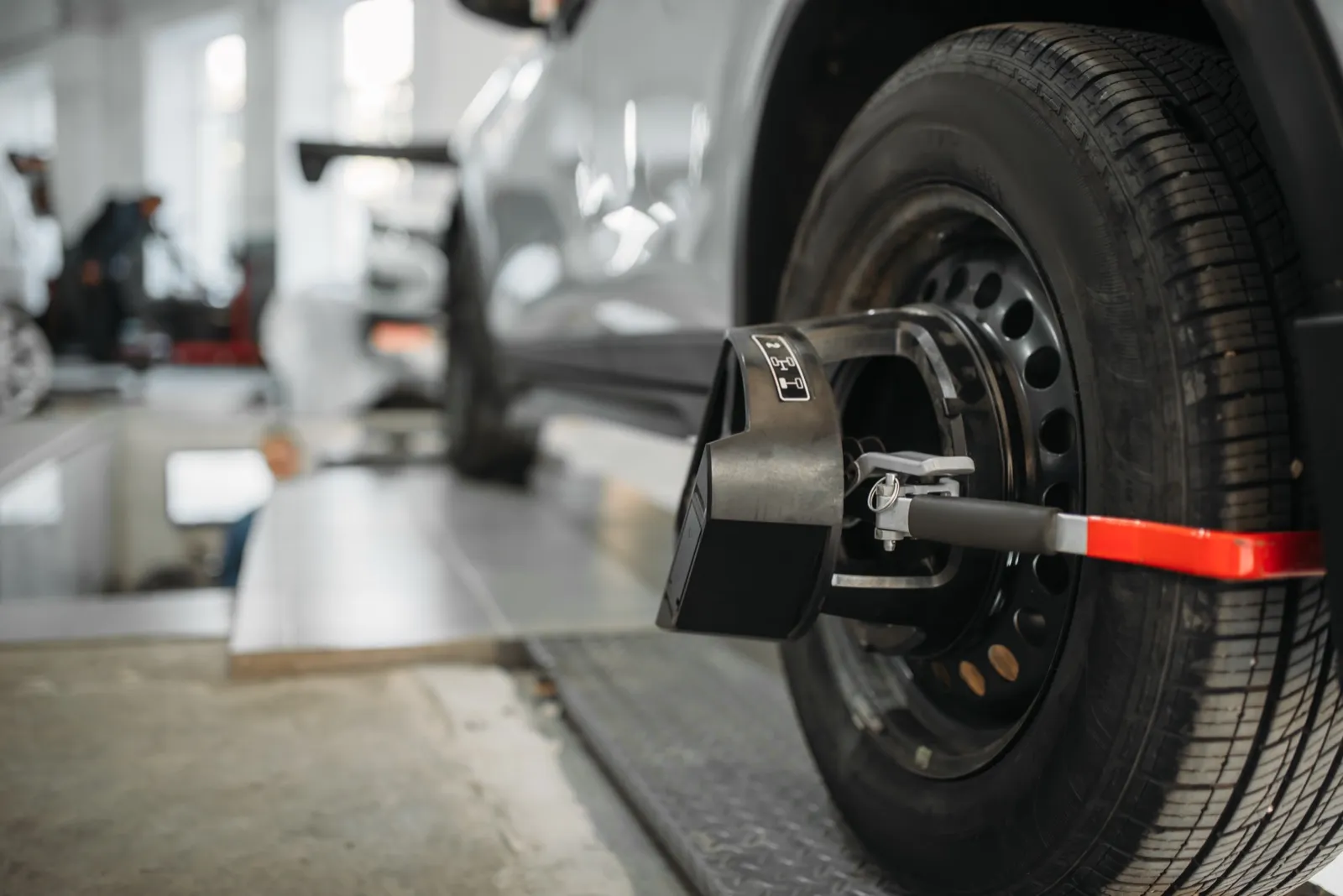
Around Central Minnesota, the biggest culprits are potholes, curbs, and frost heaves. Spring pothole season knocks more cars out of alignment than anything else we see. Beyond impacts, normal wear on suspension and steering components (ball joints, tie rod ends, bushings) lets the angles drift over time, which is why a yearly alignment check is a good habit even if nothing feels wrong. A good shop will also look at those parts during the alignment, because aligning a car with a worn-out tie rod end doesn't hold.
Noticing one or more of these signs? A wheel alignment is a quick, precise fix that saves your tires and your fuel economy. Request an appointment online or call us at (320) 363-7246 and we'll get you tracking straight again.