During a wheel alignment, a technician mounts precision sensors to each wheel, measures three key angles (camber, caster and toe) against your manufacturer's specifications, and adjusts them until everything is back where the engineers intended. The whole visit usually takes about an hour, and the payoff is straight tracking, even tire wear and often better fuel economy.
How long does a wheel alignment take?
Plan on about an hour for a typical alignment. That covers getting your vehicle on the rack, mounting the sensors, measuring every angle, making the adjustments and a quick test drive to confirm it all tracks straight.
Some visits run shorter: if we measure your angles and they're already within spec, you could be in and out faster. Others run longer: rusted or seized adjustment hardware (common here after a few winters of road salt), worn suspension parts that need attention first, or a vehicle with adjustable rear angles can all add time. If we find something that changes the plan, we'll talk to you before we proceed, not after.
What do camber, caster and toe actually mean?
These three angles are the whole story of an alignment, and none of them is complicated.
Camber is the inward or outward tilt of the tire when you look at your car head-on. Too much tilt either way and the tire rides on its edge, wearing out the inside or outside shoulder while the rest of the tread stays fresh.
Caster is the angle of the steering axis when you look at the car from the side. Picture the raked-out front fork on a motorcycle. Caster doesn't wear tires much, but it's what makes your steering wheel return to center after a turn and keeps the car feeling planted at highway speed.
Toe is whether the tires point slightly in toward each other or out, viewed from above. Think pigeon-toed versus duck-footed. It's the smallest adjustment of the three and the fastest tire-killer when it's wrong, because the tires scrub sideways against the pavement with every mile.
What happens step by step?
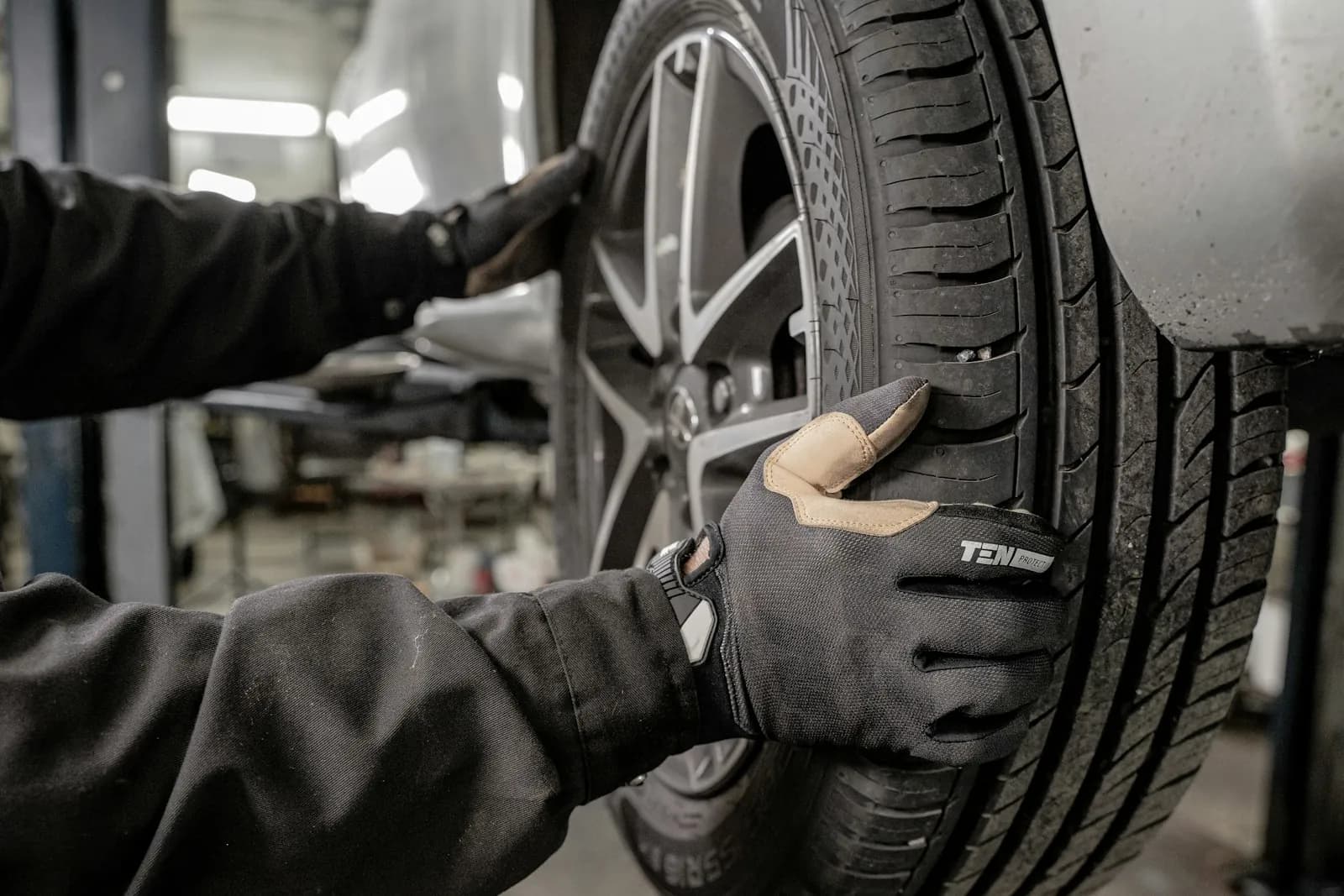
First, a quick inspection. Alignment adjustments can't hold if ball joints, tie rods or bushings are worn out, so our wheel alignment service starts with a look at the steering and suspension components, and your tire condition, before we measure anything.
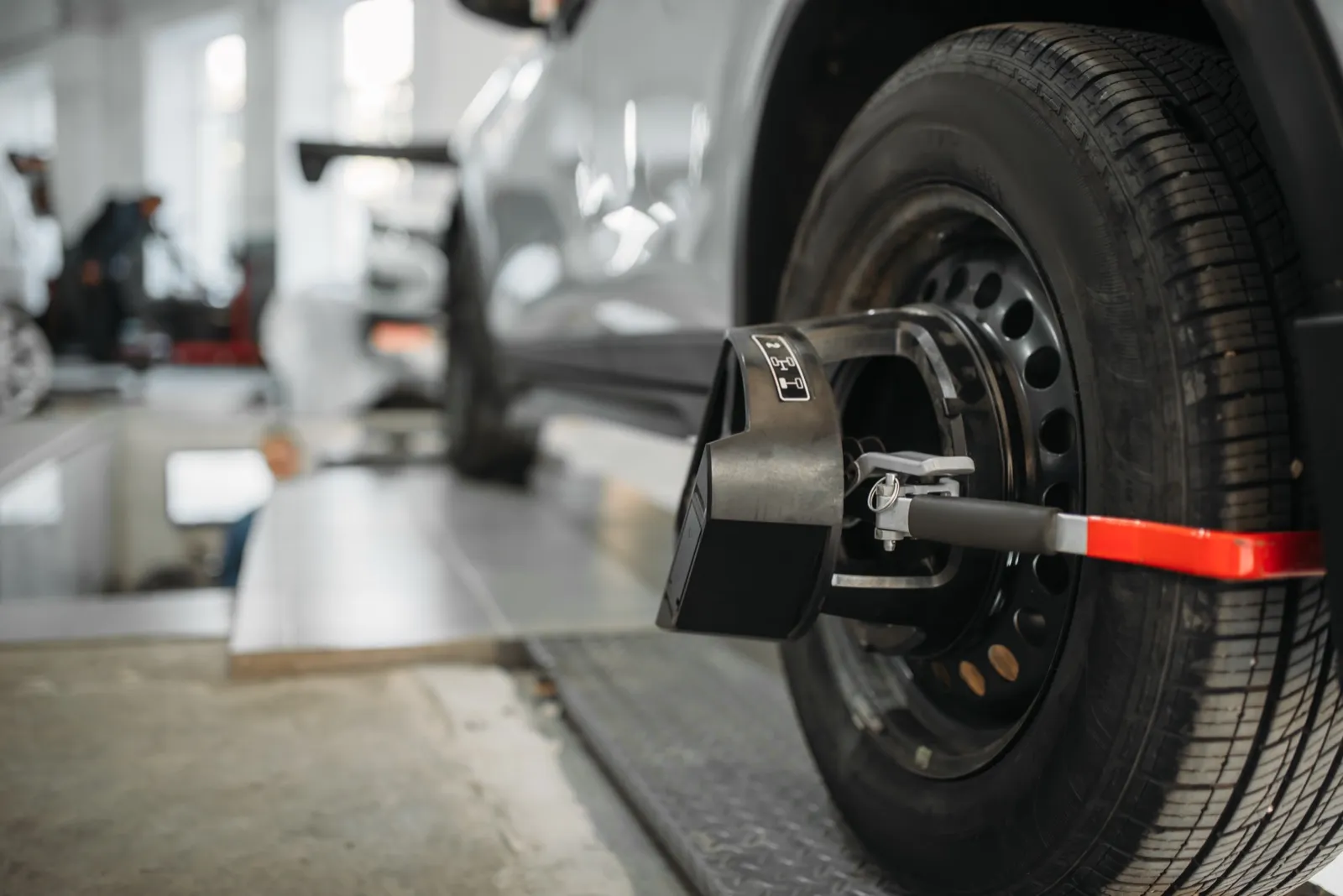
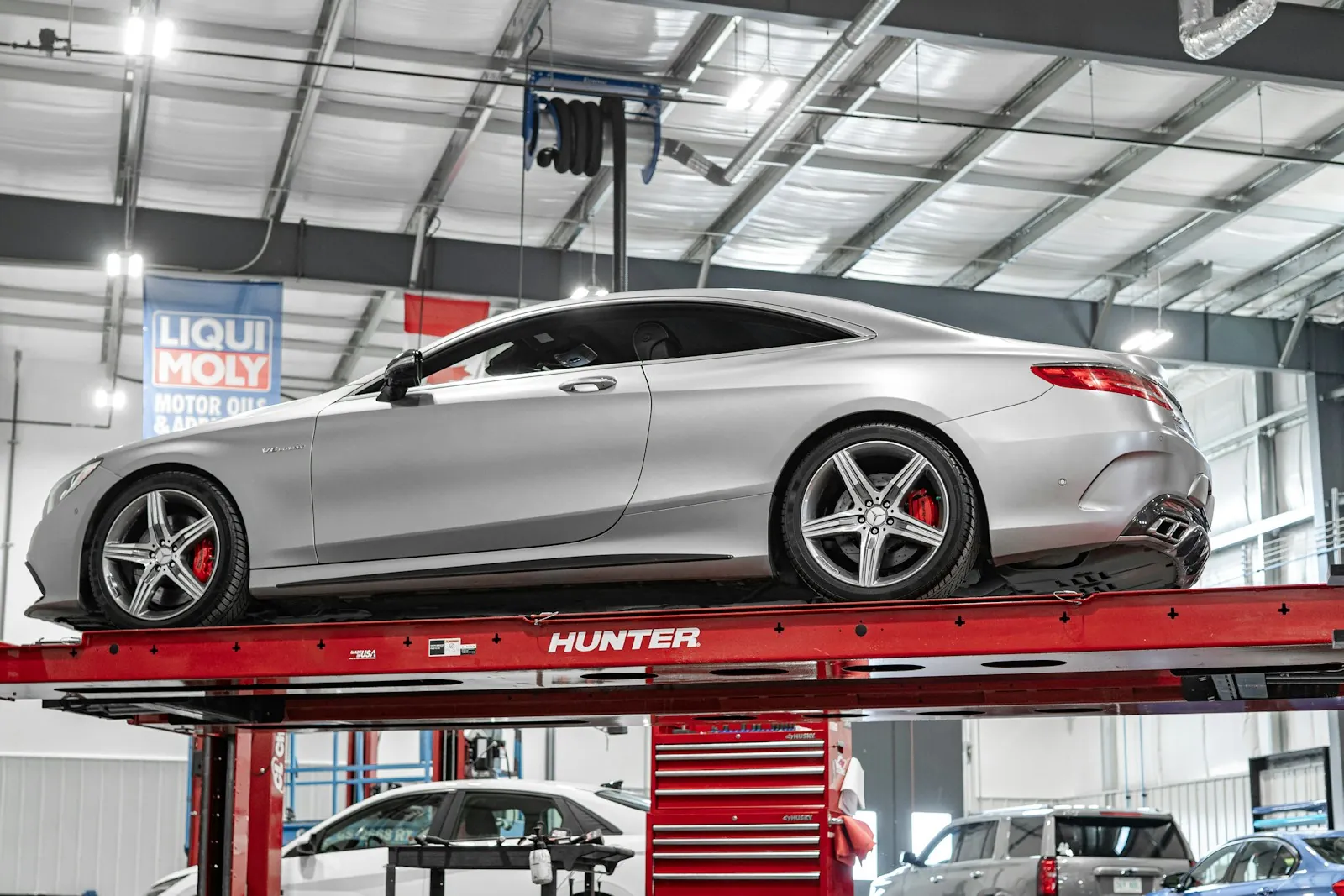
Next, your vehicle goes on the alignment rack and a sensor is mounted to each wheel. Computerized equipment reads all the angles at once and compares them to the factory specifications for your exact vehicle.
Then we adjust. Toe is adjustable on virtually every vehicle; camber and caster adjustability varies by make and model. We bring each angle into spec, and we're happy to go over the before-and-after readings with you so you can see exactly what changed.
Finally, a test drive confirms the steering wheel sits straight and the vehicle tracks true with relaxed hands on the wheel.
How do you know you need one?
The classic signs: the car pulls to one side on a flat road, the steering wheel sits crooked when you're driving straight, or your tires are wearing unevenly, one shoulder going bald while the rest of the tread looks fine. A hard pothole hit or curb strike is also a good reason to get checked, and Minnesota's freeze-thaw pothole season produces plenty of those.
It's also smart to align whenever you buy new tires. Correct angles from day one are the cheapest way to make a new set last as long as it should.
If any of this sounds familiar, request an appointment or call us at (320) 363-7246. We'll measure the angles, show you the numbers and set your wheels straight, usually in about an hour.