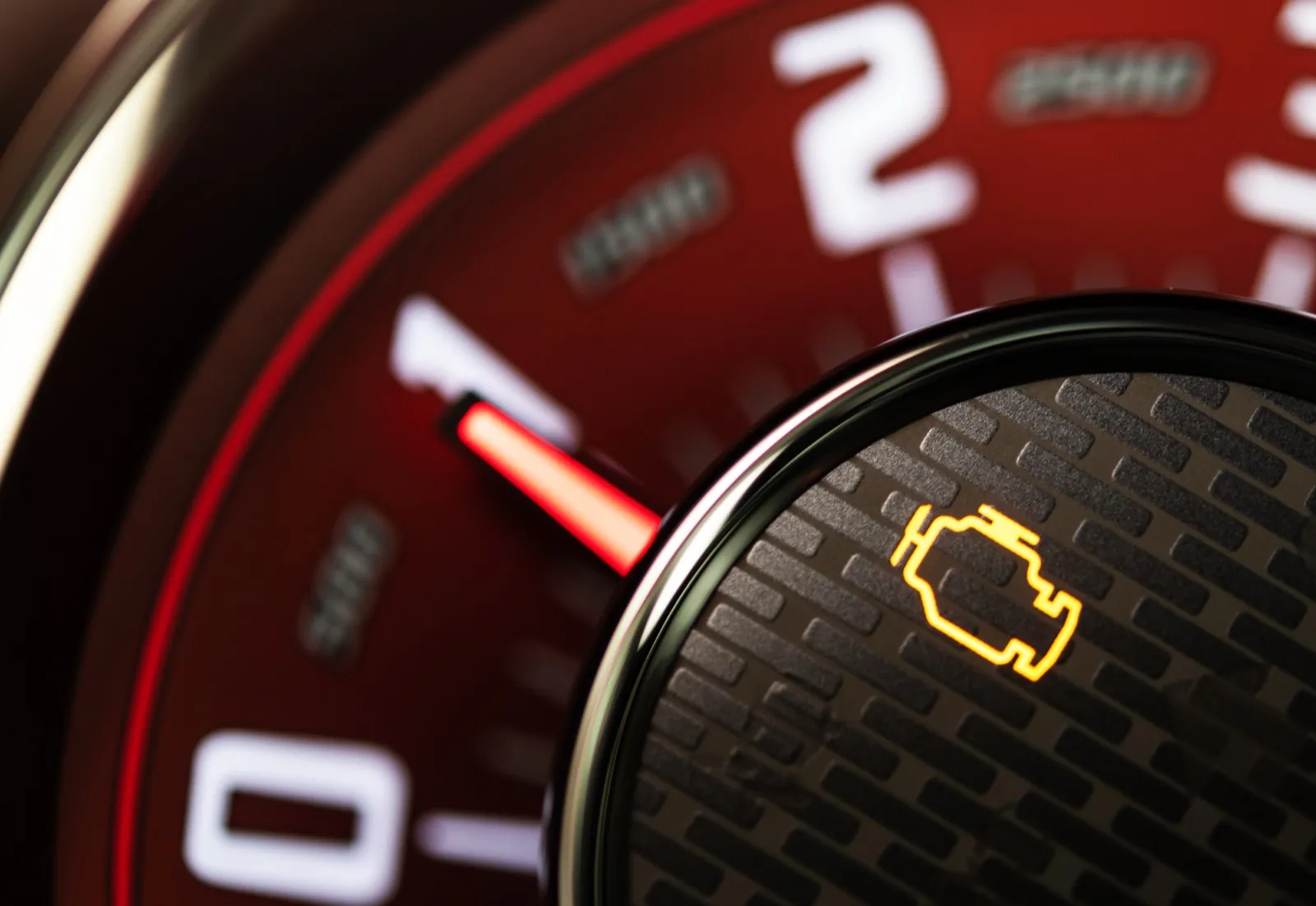
Your check engine light means your vehicle's onboard computer has detected a problem somewhere in the engine, fuel or emissions system. It covers everything from a loose gas cap to a serious misfire, so the light alone doesn't tell you how bad it is. The quick rule: a steady light means get it checked soon; a flashing light means stop driving and get help now.
What does the check engine light mean?
Every vehicle built since the mid-1990s has an onboard diagnostic system that constantly monitors dozens of sensors: fuel mixture, ignition, emissions and more. When a reading falls outside the normal range, the computer stores a trouble code and turns on the light. The code is a starting point, not a verdict: it tells you which system flagged the problem, not necessarily which part failed.
What are the most common causes?
A loose or damaged gas cap is the one everybody hopes for. The cap seals the fuel system, and a bad seal triggers an evaporative-leak code. Tighten it until it clicks; if that was the issue, the light usually resets itself after a few days of normal driving.
A failing oxygen (O2) sensor is another frequent culprit. It measures unburned oxygen in the exhaust so the computer can fine-tune the fuel mixture. A worn sensor quietly drags down your fuel economy, and left alone, it can eventually take the catalytic converter with it.
Catalytic converter codes are the ones you want to catch early. The converter itself rarely fails out of nowhere; it usually gets damaged by an ignored problem upstream, like a misfire or a bad O2 sensor. It's also one of the pricier repairs on the list, which is exactly why a prompt scan pays for itself.
Worn spark plugs or ignition coils round out the usual suspects. They cause misfires: rough idle, hesitation, sluggish acceleration. And a misfire is the most common reason a check engine light flashes instead of glowing steady.
Can you drive with the check engine light on?
If the light is steady, you can usually keep driving normally, but treat it as an appointment, not a suggestion. Get it scanned within a few days, before a small issue snowballs into a bigger one.
If the light is flashing, don't wait. A flashing light signals an active misfire, which sends unburned fuel into the exhaust where it can overheat and destroy the catalytic converter in a matter of minutes. Ease off the accelerator, avoid hard driving, and get to a shop right away, or pull over and call if the vehicle is running rough.
How do we find the actual problem?
A code reader points us in a direction, but the code isn't the diagnosis. An O2 sensor code, for example, can mean a bad sensor, or a vacuum leak or fuel-delivery problem making a good sensor read strange. Our technicians use professional engine diagnostics equipment to test the actual components and find the root cause, then give you an honest, up-front estimate before any work begins. We fix the problem, not just the code.
Light on? Give us a call at (320) 363-7246 or request a time online and we'll get to the bottom of it. We serve St. Joseph and the greater St. Cloud area.