There's no single right answer. A rebuild makes sense when the rest of the vehicle is worth the investment and your existing transmission can be gone through properly; replacement, usually with a remanufactured unit, wins when a quality unit is readily available or you need the vehicle back sooner. What tips the decision is your vehicle's age and mileage, what's actually available for it, and how long you can afford to be without it.
What's the difference between rebuilding and replacing?
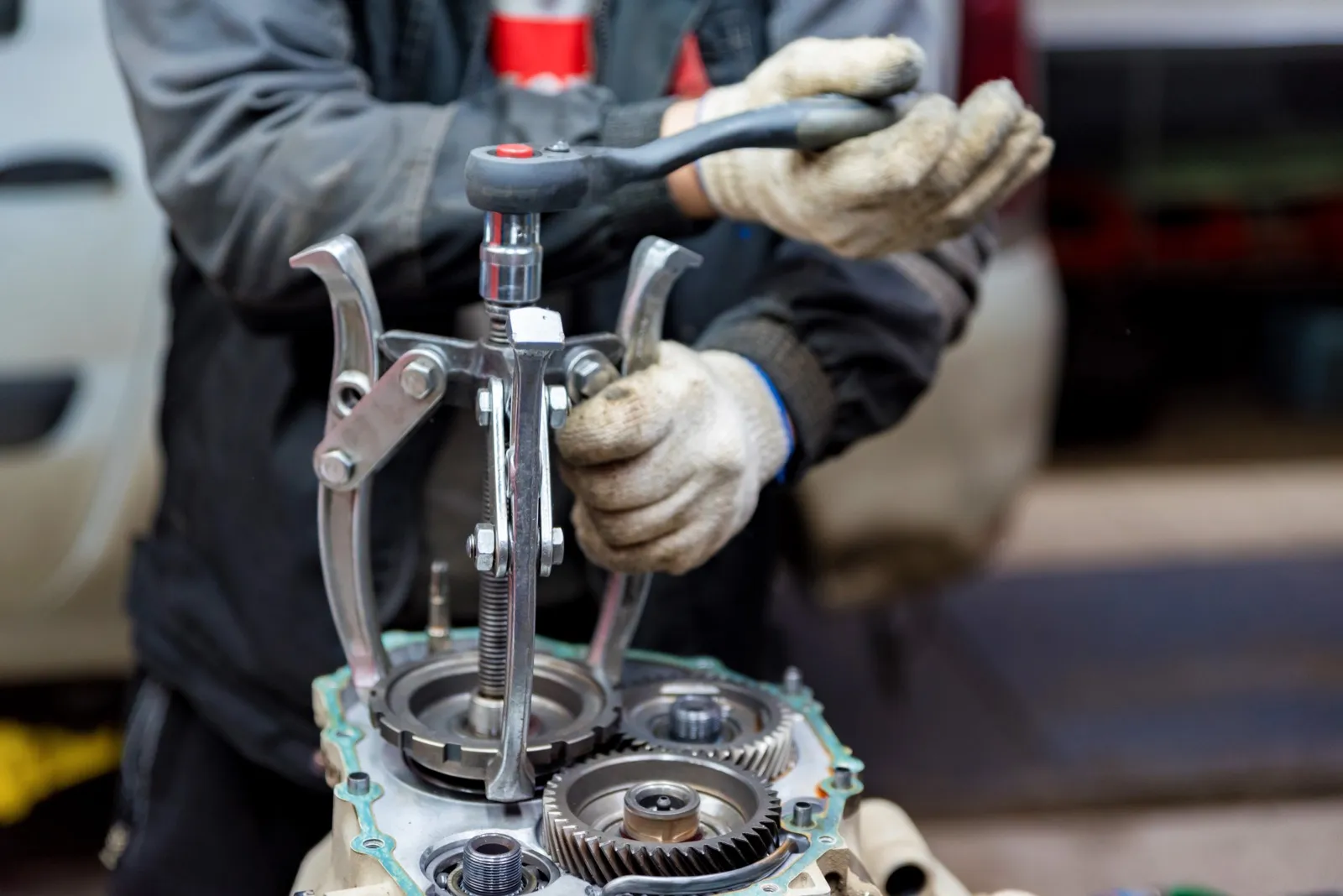
A rebuild means removing your transmission, taking it apart, inspecting everything, and replacing the worn or failed parts — clutches, bands, seals, gaskets, and whatever else the teardown turns up — before reassembling it in its original case. You keep the transmission that was built for your vehicle; it just gets renewed.
Replacing means swapping the whole unit. That's usually a remanufactured transmission, one rebuilt in a factory setting to a standard specification, or sometimes a used unit pulled from another vehicle. A good remanufactured unit can be a solid choice when one is available for your make and model. Used units are more of a gamble: you inherit another vehicle's history, and there's usually no way to know how it was treated.
How long does a rebuilt transmission last?
Done right, a long time. A quality rebuild replaces every worn part and, just as important, fixes whatever caused the failure in the first place. When both of those happen, a rebuilt transmission should serve comparably to a healthy unit with plenty of life left in it. The rebuild itself isn't what limits lifespan; the quality of the work and the care it gets afterward are.
That second part is where you come in. Keep up with fluid service — roughly every 30,000 to 60,000 miles for many vehicles, sooner with towing or heavy stop-and-go — fix leaks promptly, and don't let it overheat pulling a camper up to the lake in July. Treated well, a rebuilt transmission shouldn't be the thing that ends the vehicle's life.
How do you decide which is right?
Age and mileage come first. On a newer vehicle, or one you plan to keep for years, major transmission work is usually easy to justify. On a high-mileage vehicle that's near the end of its life anyway, it's worth stepping back and asking whether either option makes sense. Sometimes the honest answer is neither, and we'll tell you that.
Availability matters more than most people expect. Not every transmission has a good remanufactured unit sitting on a shelf. For common trucks and SUVs, reman units are often easy to source; for other vehicles, rebuilding your existing unit is the practical path. What's actually available for your make and model can settle the question by itself.
Then there's downtime. A rebuild takes bench time: teardown, parts, reassembly. If a remanufactured unit is in stock nearby, replacement can get you back on the road faster; if it has to ship from across the country, that advantage disappears. Tell us how badly you need the vehicle and we'll factor it in.
Get a diagnosis before you decide anything
Plenty of "transmission problems" turn out to be something smaller: low or burnt fluid, a failing sensor or solenoid, or an external part that doesn't require opening the case. Before you weigh rebuild against replace, make sure the transmission actually needs major work. Our transmission fluid service is the place to start: fresh fluid resolves a surprising number of complaints, and if it looks like more than that, we'll tell you straight and help you weigh the next step with no pressure either way.
If yours is slipping, shuddering or shifting hard, request an appointment or call (320) 363-7246. We'll check the fluid, tell you what we see, and what it's worth doing about it, in plain English.