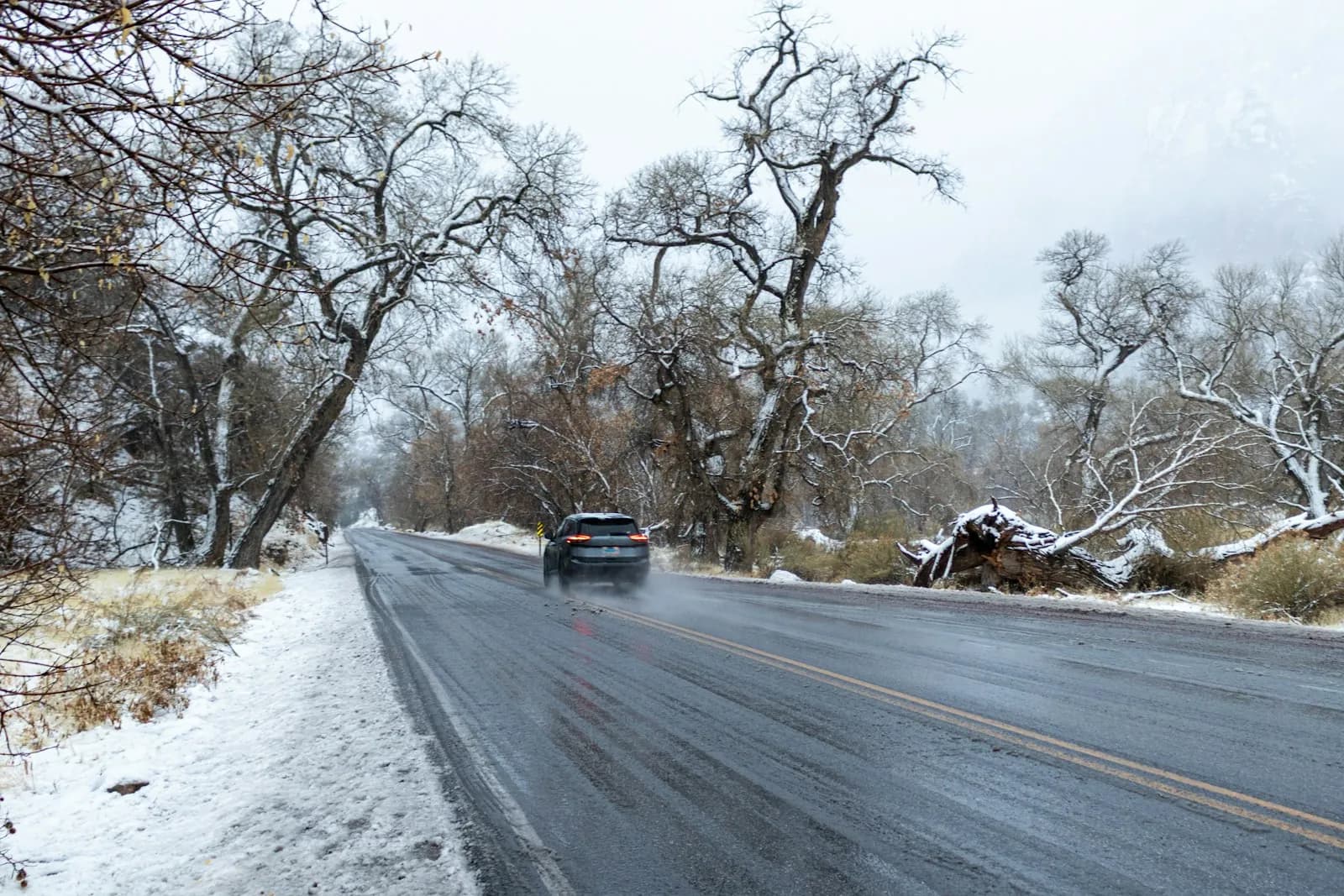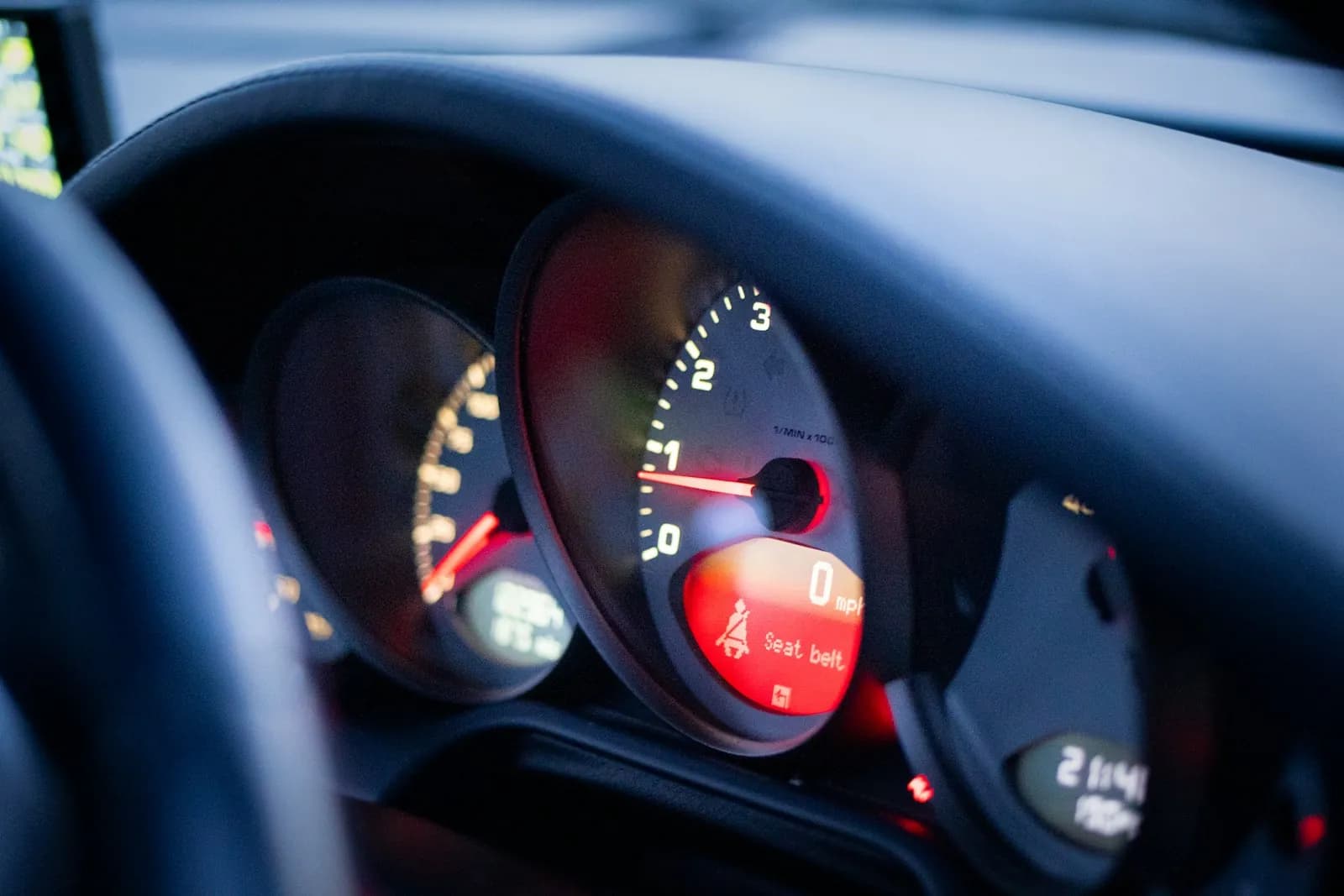
If your tire pressure light pops on with the first cold snap of the year, your tires probably aren't leaking. The air inside them is shrinking. Tire pressure drops about 1 PSI for every 10°F the temperature falls. A tire set to 35 PSI on a 70-degree October afternoon can be sitting near 30 PSI on the first 20-degree morning, and that's enough to trigger the TPMS (tire pressure monitoring system) light on most vehicles.
Why does tire pressure drop when it gets cold?
Air contracts as it cools. Nothing is wrong with the tire itself. There's simply less pressure pushing against the inside of it. Central Minnesota makes this worse than most places, because our temperature swings are big and fast. A 40-degree drop between a warm fall week and the first hard freeze takes roughly 4 PSI out of every tire on your vehicle at once.
That's also why the light often comes on during a cold morning commute and turns off by the drive home. Driving flexes the tire and warms the air inside, pressure rises a couple PSI, and the system stops complaining. The tires are still low. The light is just hovering right at its trigger point.
What should you do when the TPMS light comes on?
Don't panic, but don't ignore it either. On most vehicles the light means at least one tire is about 25 percent below its recommended pressure. Check all four tires with a gauge when they're cold, before you drive or after the vehicle has sat for a few hours, and fill each one to the pressure on your door-jamb sticker. The light usually turns itself off after a short drive; some vehicles need a manual reset, which your owner's manual covers.
Two situations deserve a closer look. If the light keeps coming back and it's the same tire that reads low every time, you likely have a slow leak, such as a nail, a leaking valve stem, or a corroded wheel bead, and a proper tire repair will fix it for good. And if the light flashes for a minute when you start the car before staying on solid, that usually points to a fault in the TPMS system itself, often a sensor battery that has died. That's a diagnosis, not an air problem.
One more Minnesota-specific trap: if you fill your tires in a heated garage, the pressure will drop again the moment the car sits outside overnight. Set them a touch above the placard number if you're filling somewhere warm, then re-check cold.
Where do you find the correct tire pressure?
The number you want is on the tire placard, the sticker inside the driver's door jamb. It lists the pressure the manufacturer specified for your exact vehicle, front and rear, and it's often different for each axle. Your owner's manual has the same figure.
The number molded into the tire's sidewall is not it. That sidewall figure is the maximum pressure the tire can safely hold, not the pressure your vehicle is designed to run. Inflating to the sidewall max, often 44 PSI or more, gives you a harsh ride, a smaller contact patch, and faster wear down the center of the tread. Door jamb, not sidewall.
Why does underinflation matter more in winter?
Winter is exactly when you can least afford to give away grip. An underinflated tire puts a distorted, squirmy footprint on the road, which means longer stopping distances and lazier steering response on snow and ice. It also builds heat in the sidewall, wears the shoulders of the tread faster, costs you fuel economy, and leaves the tire more vulnerable to pothole and curb damage once the roads get rough.
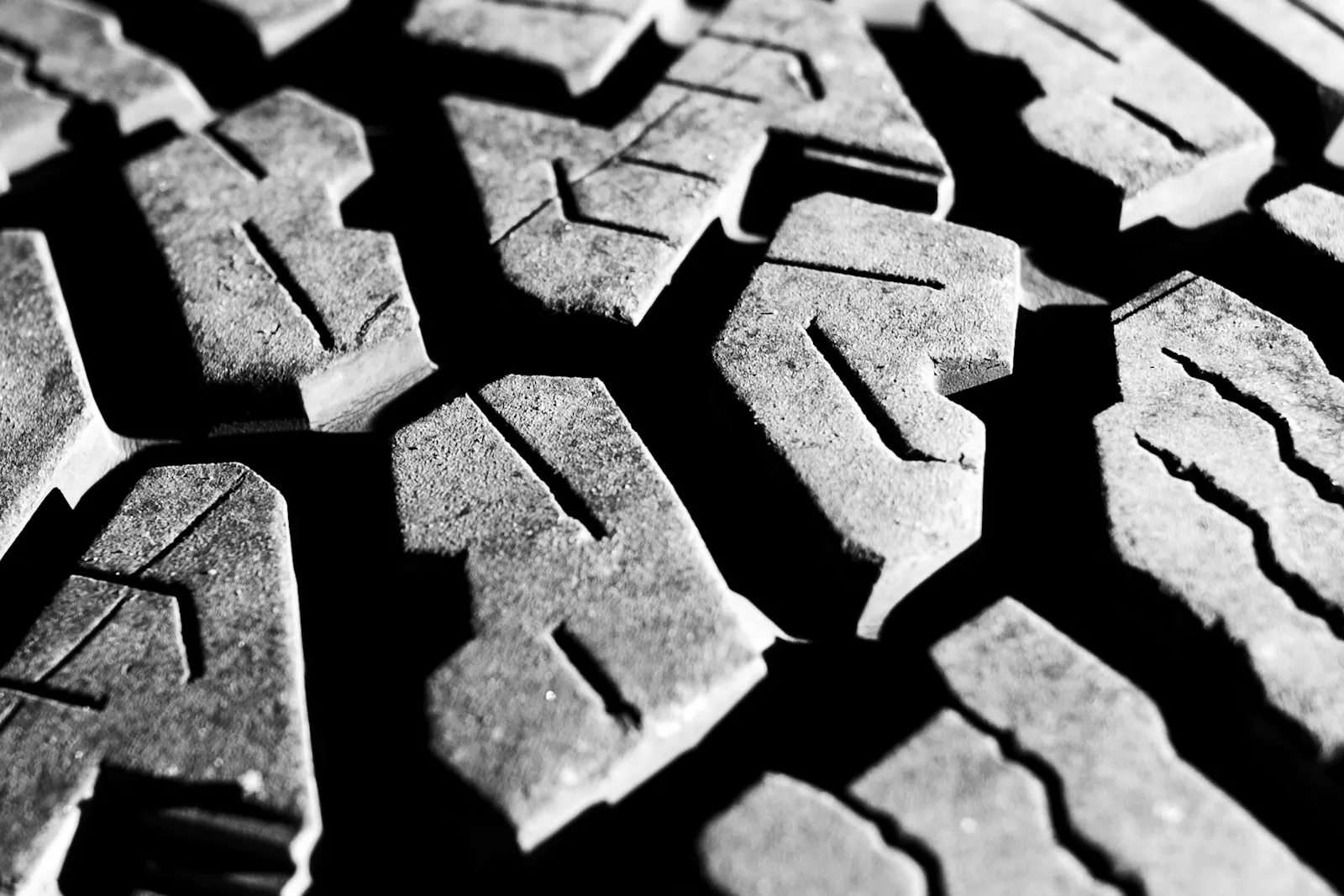
Low pressure also effectively shrinks the tread you have left. If your tires are already down near 4/32 of an inch, the point where we recommend replacing for wet and winter traction, running them soft makes them behave even more worn than they are. If that's where you're at heading into winter, it's worth looking at new tires before the snow flies rather than after.
A decent pressure gauge lives happily in a glovebox, and a once-a-month cold check through the winter takes five minutes. If the light keeps coming back, or you're topping off the same tire every week, stop in or call us at (320) 363-7246 or request a time online, and we'll find the leak and fix it right.