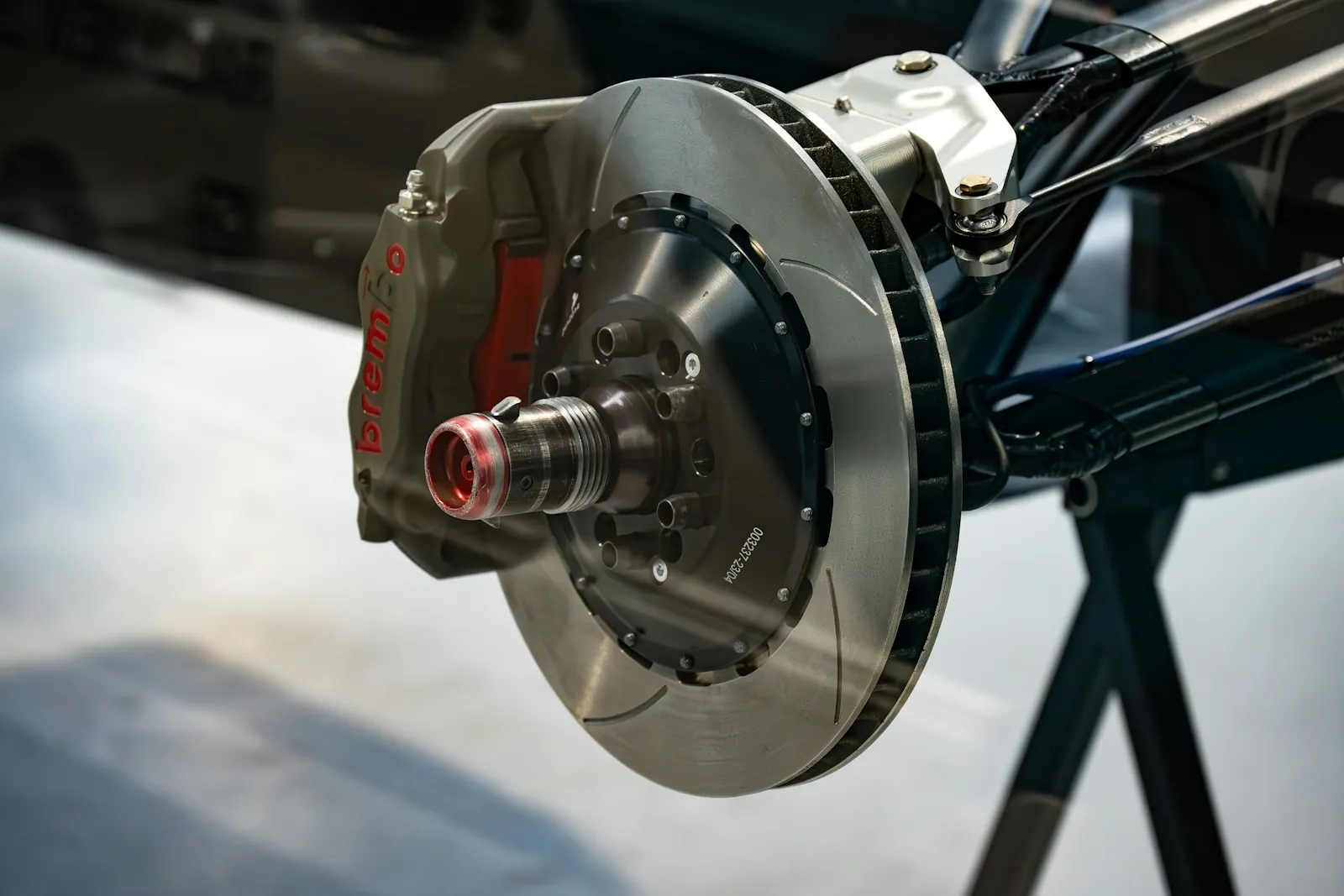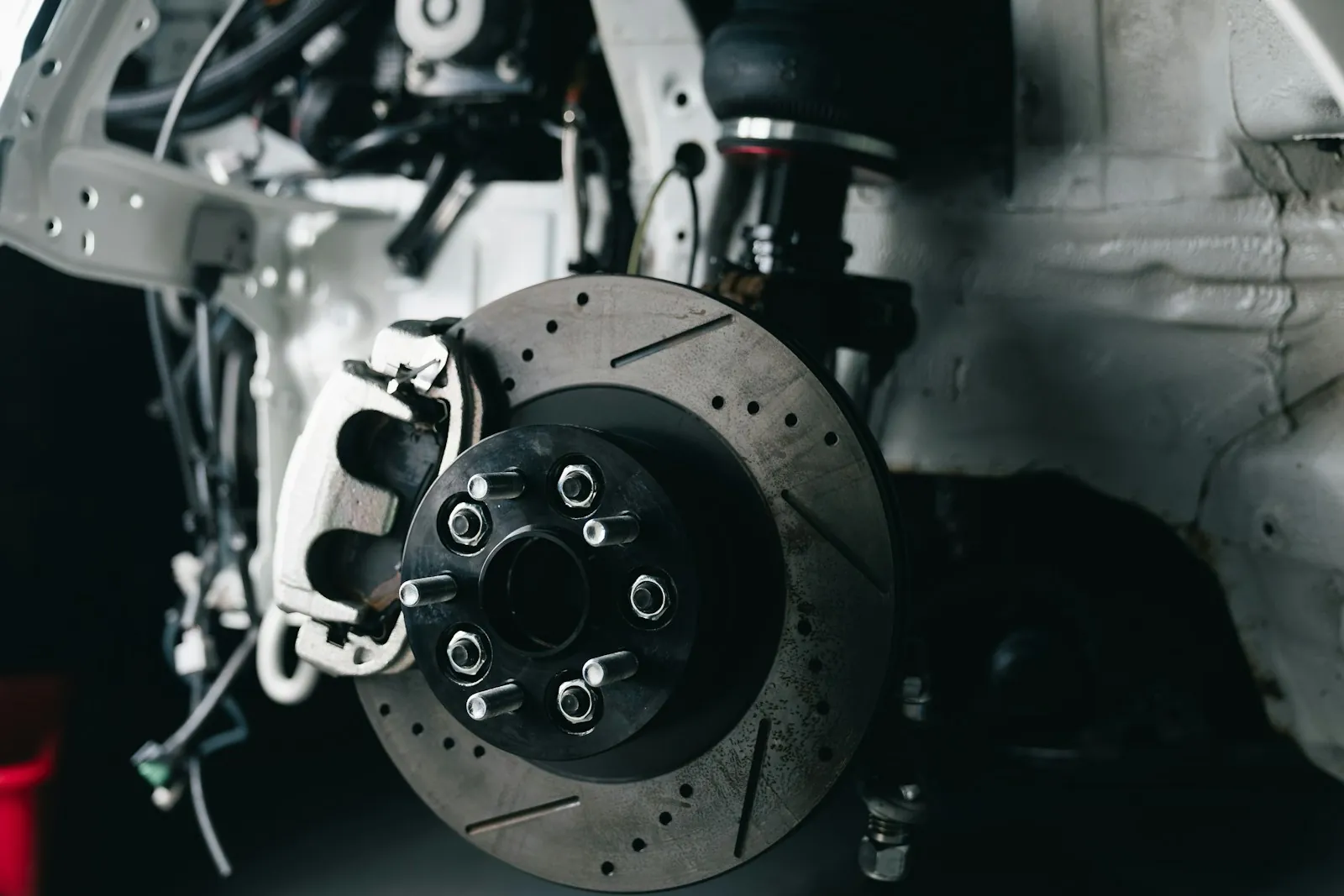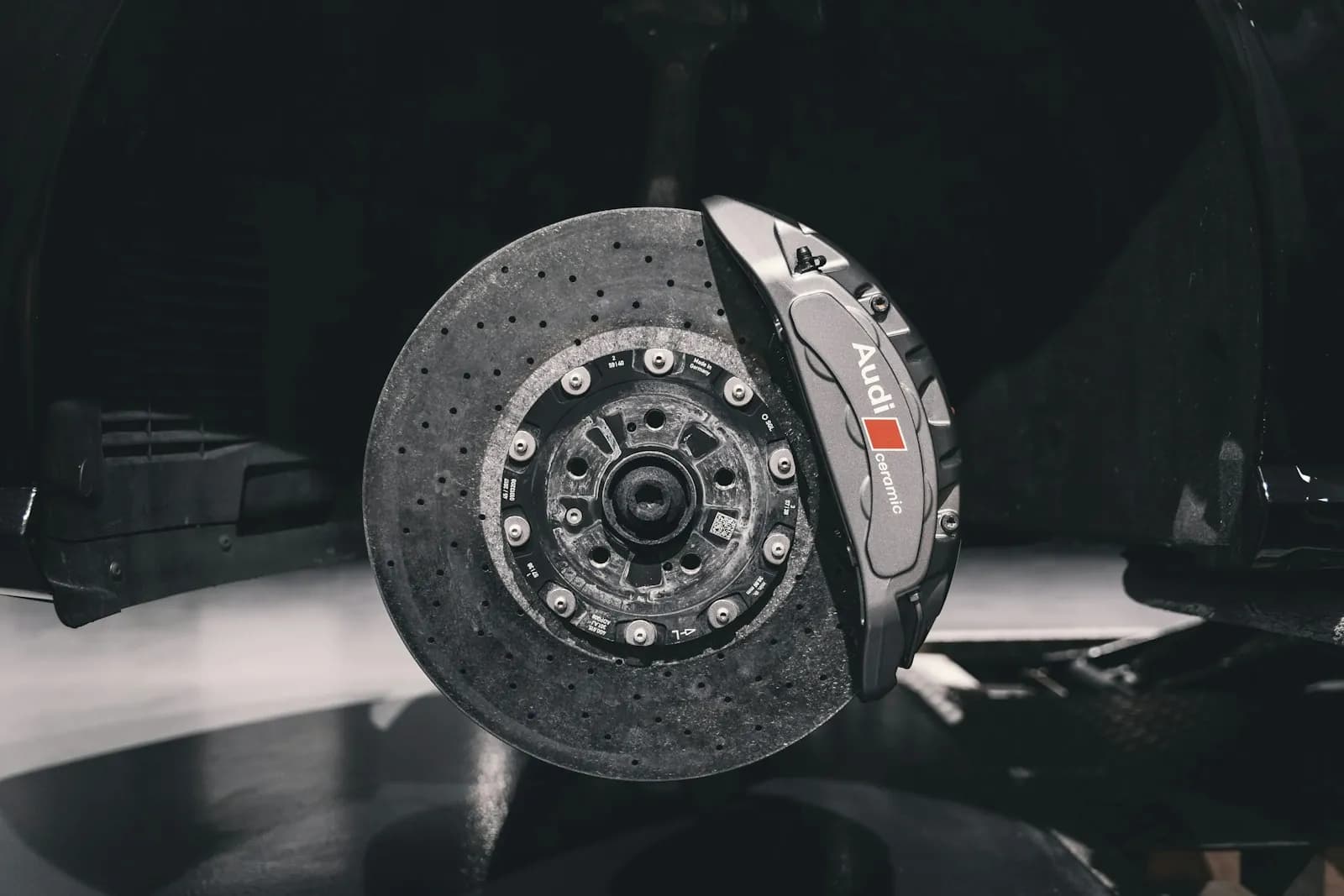
Brake pads and rotors are the two parts that do most of the work when you stop. Pads are the friction material. They clamp down and wear away a little with every stop. Rotors are the smooth metal discs the pads clamp onto, spinning with each wheel. Pads are the routine wear item and get replaced far more often; rotors last longer, but they wear too. Here's how the two work together and how to know when each one needs attention.
One quick clarification, because it trips people up: brake discs and brake rotors are the same part. "Disc" is the term you'll see in most owner's manuals; "rotor" is what most American shops say. If your manual says discs and your mechanic says rotors, nobody is talking you into an extra part. It's one component with two names.
What do brake pads do?
Every time you press the pedal, a caliper squeezes a pair of pads against the rotor at each wheel. That friction turns your car's motion into heat, and the pad material sacrifices itself a little in the process. That's by design: pads are meant to wear out so the more expensive parts don't. Replacing them on time is what protects your rotors and calipers.
Most pads include a built-in wear indicator: a small metal tab that starts squealing against the rotor when the pad gets thin. That squeal is your early warning. Grinding is the late one. It usually means the friction material is gone and metal is riding on metal, which chews up the rotor underneath.
What do brake rotors do?
Rotors are the heavy metal discs mounted behind each wheel. They give the pads a flat, true surface to grip and absorb an enormous amount of heat with every stop. Over time they wear thinner, can develop grooves and ridges, and can warp from heat, which you'll feel as a pulsing pedal or a shudder in the steering wheel when you brake.
Minnesota adds its own wrinkle: road salt and moisture cause surface rust, especially on a car that sits for a few days. A light orange film that scrubs off in the first few stops is normal. Deep rust, pitting, or a rough lip around the edge of the rotor is not. That's wear worth having measured.
How long do brake pads and rotors last?
Brake pads typically last 25,000 to 70,000 miles, and that wide range is real. Stop-and-go city driving, towing, gravel roads and a heavy right foot wear pads much faster than easy highway miles. Pad material matters too: different compounds trade off lifespan, noise, dust and stopping power.
Rotors generally last longer than pads. A common pattern is that rotors get replaced, or resurfaced if there's enough metal left, around every other pad change. Treat that as a rule of thumb, not a schedule: some rotors are worn or warped by the first pad change, while others outlast several sets of pads. The only way to know is to measure them, which is part of any honest brake job.
Do I need to replace pads and rotors together?
Not always, and a good shop won't insist on it when it isn't needed. Every rotor has a minimum thickness stamped on it. If yours measure above that spec and the surface is smooth and true, new pads alone can be the right repair. Resurfacing, machining a thin layer off to restore a flat surface, is a middle option, though many modern rotors are made thinner from the factory and often make more sense to replace than machine.
What drives the decision (and the bill) is your specific vehicle, the pad material you choose, and whether your rotors can be reused, resurfaced or need replacing. Skipping rotors that genuinely need attention is false economy: new pads on grooved or warped rotors seat poorly, wear unevenly, make noise and don't stop as well as they should. Our brake repair service starts with measuring everything, so the recommendation is based on numbers, not guesswork.
The short version
Squealing usually means pads. Pulsing or shuddering usually means rotors. Grinding means the pads are gone and the rotors are paying for it. Get in soon. If your brakes are doing any of the above, or it's simply been a while since anyone looked, schedule a brake inspection or call us at (320) 363-7246. We'll show you what's worn, what isn't, and recommend only what your brakes actually need.