Cleaning alloy wheels comes down to a simple routine: let them cool, rinse off the loose grit, wash with a pH-balanced wheel cleaner and soft brushes, dry them, and seal the finish with a wheel wax or sealant a few times a year. In Minnesota, add one more habit: rinse road salt off regularly through the winter. Here's the full routine, step by step.
How do you clean alloy wheels step by step?
Step 1: Start with cool wheels. Cleaning a hot wheel right after a drive makes cleaners flash-dry and leave spots. Park in the shade and give the wheels a few minutes.
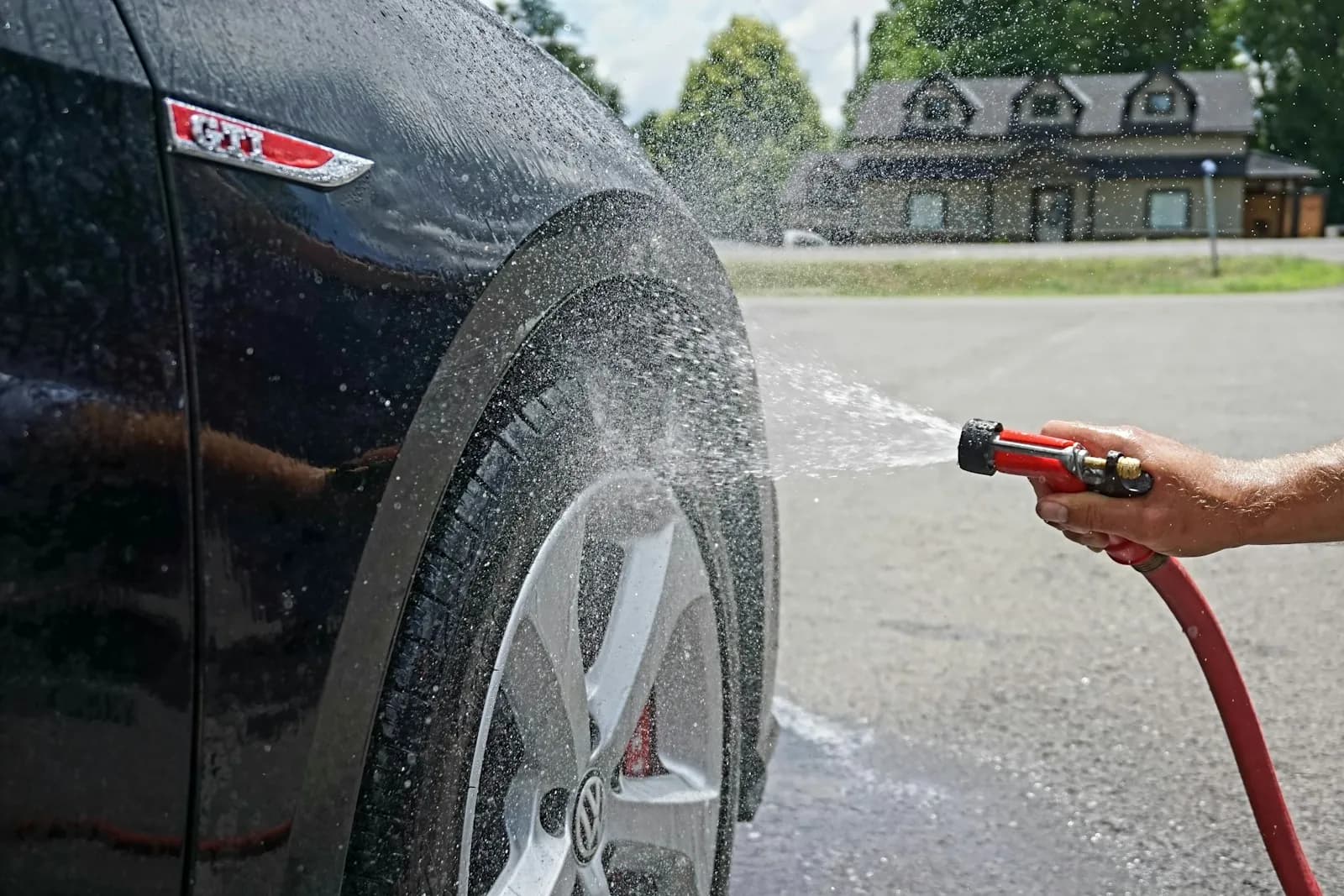
Step 2: Rinse thoroughly first. A strong stream of water knocks off loose brake dust, grit and salt before anything touches the wheel. This step matters more than people think. Scrubbing grit around is how fine scratches happen.
Step 3: Wash with the right cleaner. Use a pH-balanced, non-acidic wheel cleaner or plain car-wash soap. Avoid harsh acidic cleaners on coated, painted or polished wheels. They can etch and dull the finish. When in doubt, the gentlest product that gets the job done is the right one.
Step 4: Use soft tools. A soft-bristle brush for the wheel face, a thin barrel brush for behind the spokes, and a wash mitt you use only on wheels. Brake dust will ruin a mitt for paint duty.
Step 5: Rinse and dry. Drying with a microfiber towel prevents water spots, which are stubborn on dark or polished finishes once they bake in.
Step 6: Seal the finish. A coat of wheel wax or a dedicated wheel sealant adds a barrier that makes the next wash easier and gives salt and brake dust less to grab onto. Two or three applications a year is plenty for most drivers.
How do you protect wheels from Minnesota road salt?
Road salt is the hardest thing your wheels face all year. It clings to the wheel face and packs into the barrel and lug areas, and it accelerates corrosion, especially anywhere the finish is already chipped or scuffed. Protecting a nice set through a Minnesota winter isn't complicated; it just has to be consistent.
Seal before the snow flies. A fresh coat of wheel sealant in late fall is the single best thing you can do. Salt sitting on a sealed surface rinses away; salt sitting on bare, worn finish goes to work on it.
Rinse often through winter. Don't let salt sit on your wheels for weeks. On milder days, a touchless car wash every week or two, or a quick rinse at home when it's above freezing, washes off the worst of it before it can do damage.
Consider a dedicated winter setup. Many drivers keep their winter tires mounted on a second set of steel wheels and put the custom set away at home for the season. The salt never touches the nice wheels, and swapping complete wheels each fall and spring is quicker than remounting tires twice a year. If you're weighing that route, here's how steel and alloy wheels compare.
Why curb rash is more than cosmetic
Curb rash, the scrape a wheel picks up from a too-close encounter with a curb, does more harm than just looking rough. The gouge breaks through the wheel's protective clear coat, giving salt and moisture a direct path to the bare alloy underneath. Left alone through a winter or two, a small scuff can turn into spreading corrosion, and corrosion near the rim's edge can eventually cause a slow air leak where the tire seals against the wheel.
You can't undo the scrape with a wash, but you can slow the damage: keep scuffed areas extra clean, keep them sealed, and if a wheel with edge damage starts slowly losing air, have it checked before it becomes a bigger problem.
A few minutes of wheel care each month keeps a custom set looking sharp for years. Have questions about your finish, or thinking about an upgrade? Browse our wheel and tire packages, request an appointment, or call us at (320) 363-7246. We're happy to talk it through, no pressure.