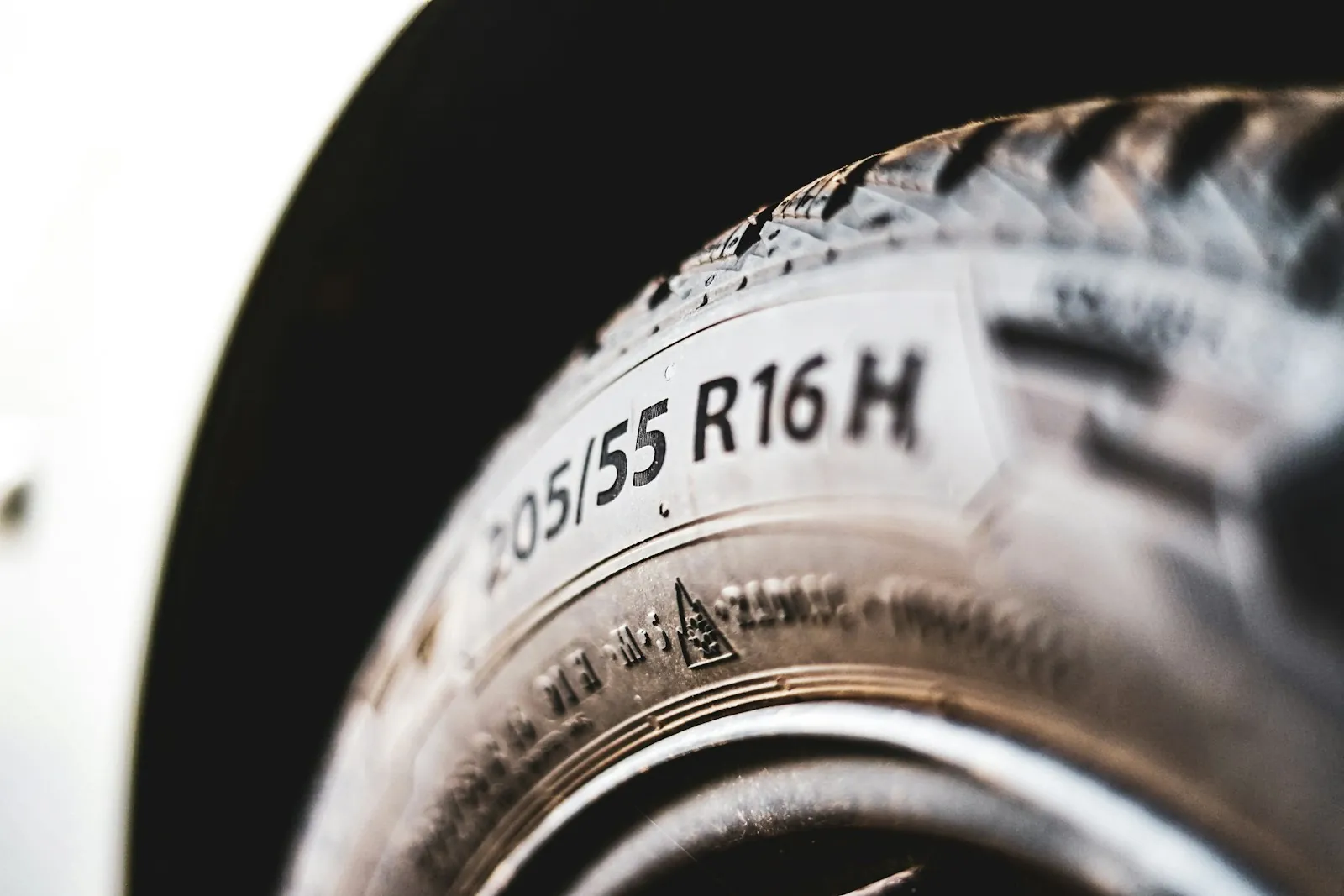
Ever looked at your tire and wondered what "225/65R17 102H" means? Read it left to right: 225 is the tire's width in millimeters, 65 is the sidewall height as a percentage of that width, R means radial construction, 17 is the wheel diameter in inches, 102 is the load index and H is the speed rating. There's also a date code stamped near the rim that tells you exactly when the tire was made. Here's how to read each one, and why they matter when it's time to replace.
How do you read tire size numbers?
Using 225/65R17 as the example: 225 is the width of the tire in millimeters. 65 is the aspect ratio: the sidewall's height is 65 percent of that width, so a lower number means a shorter, sportier sidewall. R stands for radial, which is how nearly every modern tire is built. And 17 is the diameter of the wheel it fits, in inches. You may also see a letter out front: P for passenger, or LT for light-truck tires built to carry heavier loads.
You don't have to squint at the sidewall to find your size, either. The sticker inside the driver's door jamb lists the exact size your vehicle came with, and it's the source of truth if a previous owner swapped on something different.
What is the DOT date code on a tire?
Every tire sold in the U.S. carries a DOT code, and the last four digits are the date code: the first two are the week the tire was made, the last two are the year. A tire stamped 3523 was built in the 35th week of 2023, early September. On many tires the full code only appears on one sidewall, so you may need to check the inside face.
Why it matters: rubber ages whether you drive on it or not. Most tires should come off by around six years old regardless of how much tread is left. Heat, sunlight and Minnesota's temperature swings all take a toll. The date code is also the first thing to check on a used tire, or on a bargain set that may have sat in a warehouse for years. There's more on tire aging in our guide to when to replace your tires.
What do tire speed ratings mean?
The letter at the very end, the H in 102H, is the speed rating: the top speed the tire is certified to sustain when properly inflated and loaded. Later letters generally mean higher ratings. S and T tires, rated for 112 and 118 mph, cover most sedans, minivans, SUVs and pickups. H tires, rated to 130 mph, are common on a lot of passenger cars. V and above (149 mph and up) show up on performance vehicles. Winter tires often carry lower ratings like Q or R (99 and 106 mph), and that's normal: they trade top-end speed for cold-weather grip.
Obviously nobody is doing 130 on I-94. The rating still matters because it reflects how the tire is built: higher-rated tires typically use stiffer construction and respond more crisply to steering. The simple rule: match or exceed the speed rating your vehicle came with, unless you're switching to winter tires for the season.
What does the tire load index mean?
The number just before the speed letter, the 102 in 102H, is the load index, a code for how much weight the tire can safely carry. The scale isn't obvious at a glance: 102 works out to about 1,874 pounds per tire, or roughly 7,500 pounds across all four. A load index of 91, common on smaller cars, is good for about 1,356 pounds per tire. The higher the number, the more the tire can carry.
This is one spec never to shortcut: don't go below the load index your vehicle calls for. It matters most on trucks, vans and anything that tows or hauls, because an overloaded tire builds heat and can fail. Some sizes also come in XL (extra load) versions with a higher index for vehicles that need it.
Once you can read the sidewall, tire shopping gets a lot simpler. Punch your size — or just your year, make and model — into our tire finder to see what's available, or call us at (320) 363-7246 and we'll decode it for you. And if it still looks like alphabet soup, stop by the shop in St. Joseph. We read sidewalls all day.